
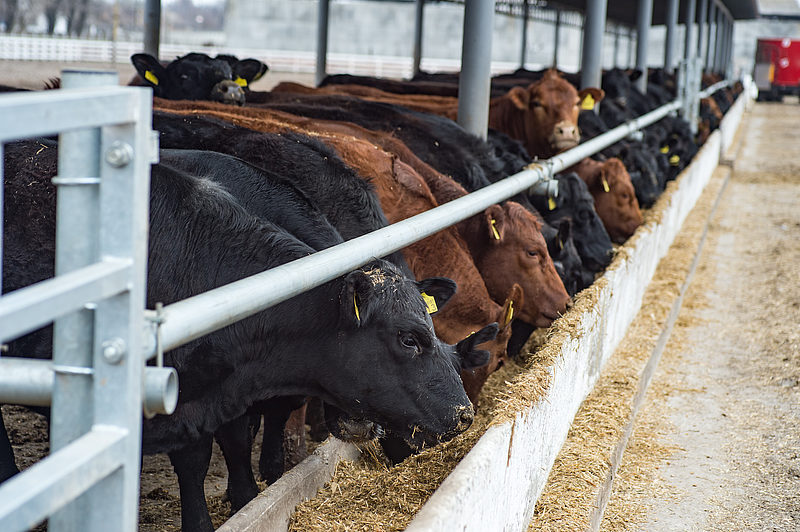
Feedlotting is a controlled, intensive feeding system where cattle are finished on a high-energy, grain-based diet. The objective is to efficiently produce high-quality beef with consistent carcase characteristics, regardless of environmental variability.
Notes on Feedlotting Cattle
In Australia, feedlots are a vital component of the beef supply chain, ensuring continuity of supply and meeting specific market requirements domestically and internationally.
Feeding grain-based feedlot rations to cattle offers farmers the flexibility to finish cattle quickly and take advantage of high-quality feeder cattle, good feed prices or favourable markets.
This system enables producers to align finishing cycles with demand and pricing windows, supporting profitability and efficiency.
In order to take advantage of these opportunities, small and large feedlot operators must look at all the factors involved with feedlotting, and in particular the management of cattle being fed high grain diets. Adaptation of cattle onto these diets is of critically importance and may often determine the success of feedlotting ventures.
Phases of Cattle Feedlotting
Feedlotting is typically structured into two key feeding phases, each with specific goals and ration requirements.
Introduction (0-21 days)
Induction On Arrival At The Feedlot:
Newly arrived cattle are under stress from transport, handling, and dietary changes. Nutritional and health management must be carefully considered.
When cattle enter the feedlot yard they should be fed a palatable grassy or cereal hay for the first two (2) days (DO NOT USE LUCERNE HAY OR OTHER LEGUME HAY) to ensure the rumen is full before any grain feeding commences.
When cattle arrive at the feedlot they are usually vaccinated with ‘5 in 1’ or ‘7 in 1 vaccine’, ear tagged or identified, dehorned, drenched, given a Vitamin A, D & E injection, BRD (Bovine Respiratory Disease) vaccine and weighed.
It is advisable to have your veterinarian check the animals to ensure that there are no health problems that may reduce their performance in the feedlot.
Include buffers and yeast products to aid rumen transition during this period.
Self Feeders:
During this introduction period, the slides should be all the way down to a finger width. Cattle should have to work to lick the feedlot mix. The slides can gradually be adjusted upwards over 3 weeks until they are on full feed.
Once cattle are settled, the focus shifts to building lean muscle and skeletal frame development.
Moderate energy, high protein rations to support tissue development.
Continue to feed roughage to maintain rumen health.
Use of ionophores (e.g. monensin) to improve feed efficiency.
Monitor health indicators like dung consistency and feed intake.
From the third day onward, cattle should have unlimited access to grass hay or cereal straw at ALL TIMES. This roughage should be no less than 20% of the total feed intake, on a dry matter basis.
Start by feeding the animals small amounts of the feedlot grain ration.
A rumen buffer should be used during the starter phase as this will aid in the prevention of acidosis. Sodium Bicarbonate at 1-2% or Acid Buf/Maxi Buf at 0.5–1.0% of the ration is usually adequate. (Already included in RIVERINA FEEDLOT PELLETS/MEAL).
Gradually increase the amount of the grain fed, so that after 3 weeks, the animals are consuming high amounts of the grain diet. Refer to the sample introduction programs for each product.
Finisher Phase (3rd week +)
The finishing phase targets muscles fat deposition and marbling.
High-energy diets (12.5–13 MJ ME/kg DM) to drive weight gain.
Protein levels can be reduced to ≈ 12% as muscle growth slows.
Maintain fibre to prevent acidosis.
Include buffers and yeast products to aid rumen transition during this period.
Management Of Cattle In A Feedlot:
The feedlot ration can be provided to the cattle in self-feeders, bunks or troughs. It is important to monitor the feed in these feeders, to avoid a period when there is no feed available to the cattle. If the cattle are without feed for even a shirt time period, they may gorge themselves which will lead to acidosis.
The feeders and troughs should be checked regularly to ensure the feed is flowing and any stale feed is removed.
Ensure that there is enough bunk, feeder and yard space for the cattle.
The cattle MUST have unlimited access to cool, clean WATER. Troughs should be cleaned twice a week.
Nutritional Requirements
Feeding feedlot cattle requires a science-based approach to meet their evolving nutrient needs.
Nutrient | Role | Target Range |
Energy (ME) | Drives growth and fat deposition | 11.0-13 MJ/kg DM |
Crude Protein | Builds muscle and supports rumen microbes | 12-18%, depending on weight |
Fibre (NDF) | Maintains rumen function | 15-25% |
Calcium & Phosphorus | Bone health, metabolic balance | Varies |
Salt | Fluid balance | Varies |
Trace Minerals | Immunity, cellular function | Varies |
Vitamins | Metabolic function | Varies |
Grain and roughage sources should be of good quality and free from mould. Grain should be tested for protein. Low protein grains may require additional protein to be added to the diet.
Roller milling of grains into 2 or 3 particles (as opposed to hammermilling) is recommended as this will minimise the incidence of acidosis. If using wheat, closer monitoring of intakes and for sickness is needed because the starch degradation is faster than other grains.
Common Feed Ingredients
Riverina rations are built from carefully selected ingredients to deliver consistent performance.
Energy Sources: Barley, wheat, sorghum, corn, oil.
Protein Meals: Canola meal, Soybean meal.
Additives: Buffers, ionophores, yeast, bentonite, vitamins, macro + micro minerals.
Moisture Content of Diets
The feeding directions for concentrates are on an ‘As Fed’ basis for a typical rolled grain/hay diet which will have a Dry Matter content around 88-90%. If high moisture ingredients such as silage, vegetable or fruit by products, brewers’ grains etc are used, the addition rate of the concentrate will be less.
Contact your Riverina Sales Representative to confirm the addition rate before using the concentrate.
Health Management
Health is critical to feedlot profitability.
Follow vaccination protocols and do regular veterinary health checks. Shy Feeders – Not all cattle will perform well in a feedlot. There will always be a certain number of cattle that will not increase intake of the ration and thus will not grow well as well as expected. If these animals can be identified early, they can be removed from the yard and fattened on pasture. If left in the feedlot, these animals will reduce profitability by wasting feed.
It is important to check animals daily. Check for signs of scouring, poor performance, depressed behaviour, poor appearance, bloating, respiratory illness and lameness. These animals are probably suffering from acidosis, bloat or other health issues. Move these animals to a recovery pen. They should only have access to hay at this stage. Allow three to four days for the animals to recover. Once recovered the animals may be restarted, similar to new cattle.
Contact your Riverina representative if you need further information.
Return to Knowledge Base All Categories



 Beef
Beef
 Dairy
Dairy
 Sheep
Sheep
 Horse
Horse
 Pig
Pig
 Goat
Goat
 Poultry
 Bird
Bird
 Dog
Dog
 Special
 Feed Materials